
Servers Applications
Server Software
Sowneo provides installation and maintenance of all the software services required for your information system.
Acmemgr.sh
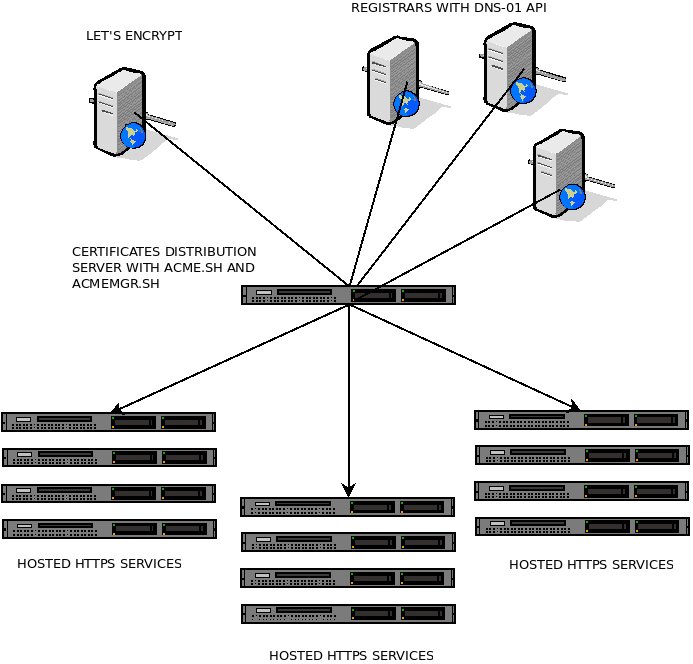
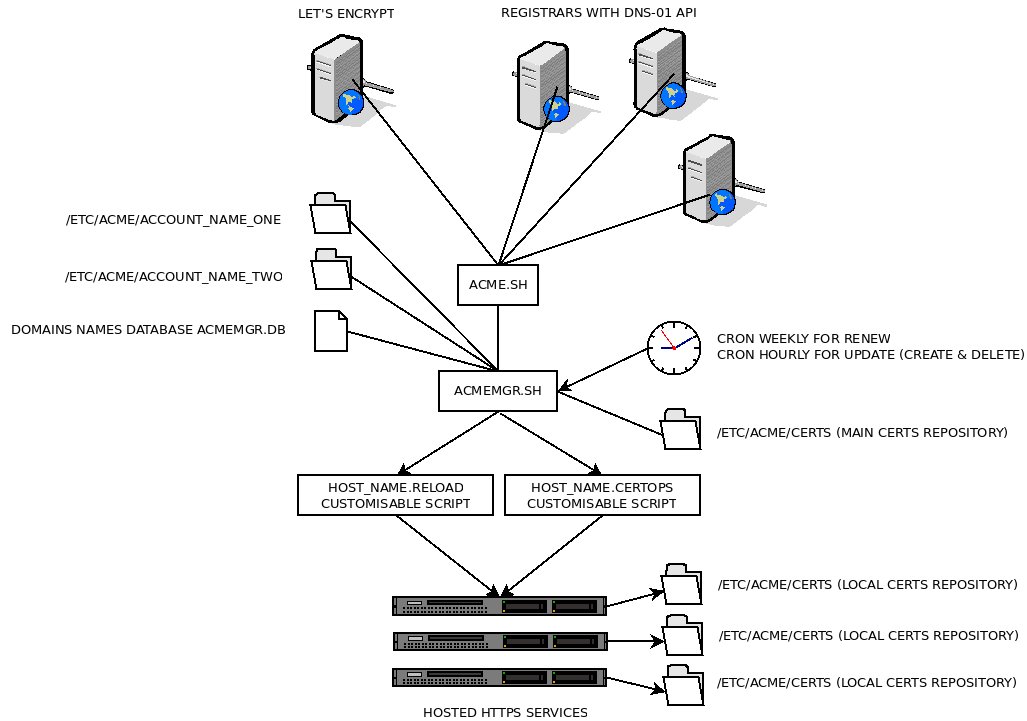
Acmemgr.sh is an acme.sh manager for an unlimited number of CERTS, TLS services, hosts, and DNS-01 accounts from domain name providers.
Thus, it is designed to work alongside acme.sh, the ACME client written for Lets Encrypt, the only free, automated, and open certificate authority available to you, provided by the nonprofit Internet Security Research Group (ISRG).
What Acmemgr.sh manages:
- N domain certificates
- On N https services (web or email or other – configurable child scripts)
- And also on N hosts (dedicated or virtual)
- With N DNS-01 accounts (even from different hosting services)
- Wildcard certificates
Burp BurpUI
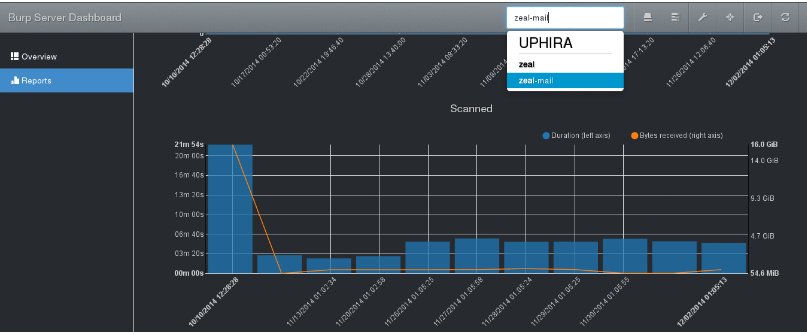
Burp est un programme de sauvegarde et de restauration en réseau. Ainsi, il tente de réduire le trafic réseau et l’espace utilisé par chaque sauvegarde. De plus, Burp est conceptuellement très supérieur à Bacula1https://burp.grke.org/why.html, autre logiciel libre de sauvegarde, qu’il remplace avantageusement.
Features include:
- The server runs on Unix-based systems
- The client runs on Unix and Windows
- Delta differentials
- Network backups and network bandwidth limiting
- Restoration of files, directories, symbolic links, hard links, fifos, nodes, permissions, and timestamps
- Backup and restoration of ACLs and xattrs on Linux and FreeBSD
- Support for Windows Volume Shadow Copy Service (VSS), Windows 32-bit and 64-bit, EFS files, permissions, file attributes
- Storage and network compression
- Ability to resume interrupted backups
- Client/server communication encryption using SSL
- Automatic SSL certificate authority and client certificate signing
- Client-side file encryption
- Scheduling
- Email notification of backup successes/failures
- Single daily summary email
- Server monitor
- Read/write Fifo support
- Client pre/post backup and restore scripts
- Multiple retention periods (e.g., keep 1 daily backup for 7 days, 1 weekly backup for 4 weeks, 1 backup every 4 weeks for one year)
- Storage data deduplication
- Automatic client upgrades
Elastic Search - Open Search
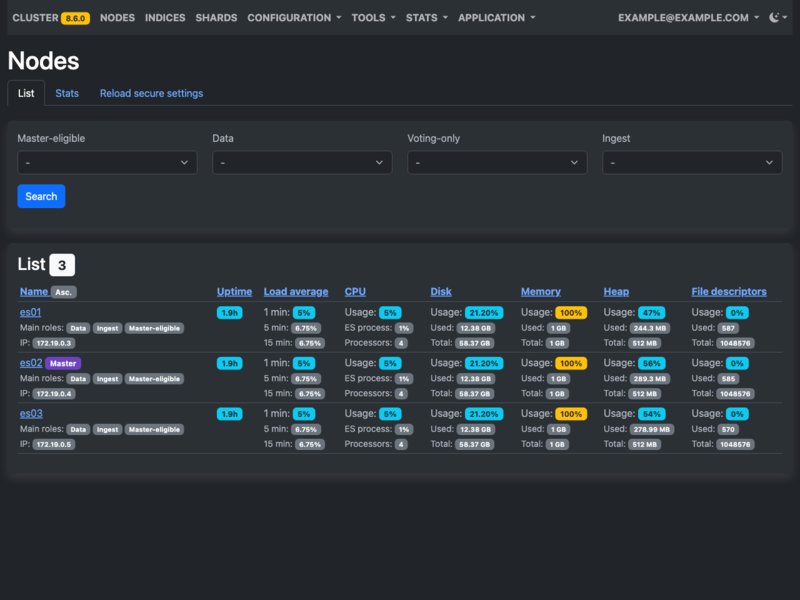
Distributed text indexing system with search engine accessible via REST API with JSON exchange format.

Firebird - Fyracle
SQL database derived from Interbase, particularly robust, low resource usage, and suitable for embedded systems.
- Support for stored procedures and triggers
- ACID transactions
- Referential integrity
- Multigenerational architecture (MVCC)
- Support for external functions (UDF)
- SQL activity can send asynchronous notification events to clients
- Third-party tools, including GUI administration tools and replication tools
- Careful writes – rapid recovery, no need for transaction logs
- Numerous access methods: native/API, dbExpress/FireDAC drivers, ODBC, OLE DB, .NET provider, native type 4 JDBC driver, Python, PHP, Perl modules
- Incremental backups
- Full cursor implementation in PSQL
MinIO & OpenMaxIO
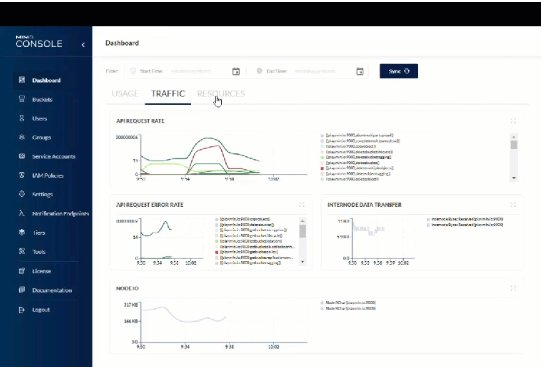
MinIO, with its OpenMaxIO administration interface, emulates Amazon’s storage service, better known as Amazon S3.
Thus, it eliminates the need for a non-sovereign Amazon service that cannot guarantee confidentiality due to its subordination to the U.S. Patriot Act—an extraterritorial law incompatible with European GDPR regulations.

MariaDB & Galera Cluster
MariaDB is an open-source database, forked from MySQL, which now belongs to Oracle. It is also one of the most widely used databases in the world, with users like Wikipedia, WordPress.com, and Google.
Galera Cluster is a multi-master cluster based on synchronous replication. It is a highly available, easy-to-use, lossless, and scalable solution.

MySQL
MySQL, now owned by Oracle, is mentioned only as a historical reference. The future and feature development clearly lie with MariaDB.

Nginx Proxy & Serveur
NGINX is a general-purpose web server and proxy. It is asynchronous, unlike Apache, which is synchronous. Thus, each request in Apache is handled by a dedicated process.
NGINX uses a state machine to handle many connections simultaneously, rather than performing parallel processing with tasks.
Multiple processes can be started to take advantage of multiprocessor systems. This architectural choice results in very high performance and far lower load and memory consumption than traditional HTTP servers like Apache.
Hosting Optimization – FastCGI Cache with Cache Warmer
WordPress s’appuie sur des technologies anciennes (SQL a eu un demi-siècle en 2024) ou des technologies inefficaces (langage interprété PHP). Mais ce n’est pas une critique sur la conception de WordPress, qui a simplement utilisé les technologies dominantes du début de XXIe siècle, avec le succès que l’on sait.
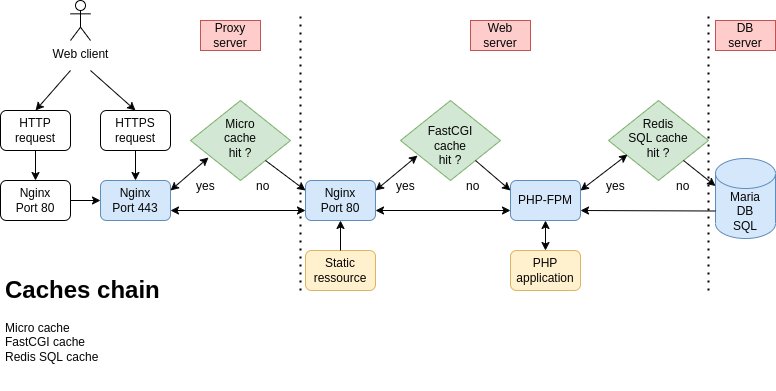
So, we must work with it and overcome the limitations using caching solutions for:
- the proxy, using micro-caching
- the web server, with the PHP interpreter, using FastCGI cache (second diamond)
- SQL on the back end, using Redis cache to reduce heavy load (a single WordPress page can generate around a hundred queries)
Le cache Fast-CGI est effacé la nuit et recréé uniquement pour les pages statiques. Les pages dynamiques (panier e-commerce, etc.) ne sont pas cachées et seront toujours créées à la volée.
Moreover, PHP workers are almost never used during the day, except for dynamic pages, and response times are extremely fast (250 ms for a complex page) because they depend only on network speed.
Ainsi, cette solution nécessite la maîtrise de sept points clés, issue de la R&D Sowneo.
De surcroît, elle comprend une méthode d’invalidation de cache efficiente, afin que la productivité de nos concepteurs WordPress ne soient pas impactée par cette technologie.

Postfix
Postfix is an email server. It was designed as a faster, easier-to-administer, and more secure alternative to the historical Sendmail.
Postfix is the default mail server on several UNIX-like systems, such as macOS, NetBSD, and of course many GNU/Linux distributions.

PostgreSQL
PostgreSQL is a relational (RDBMS) and object (ORDBMS) database. Moreover, it is open-source and emphasizes extensibility and SQL compliance.
Likewise, it supports transactions with ACID properties (Atomicity, Consistency, Isolation, Durability). Consequently, it also offers advanced features such as automatically updated views, materialized views, triggers, foreign keys, and stored procedures [3].
Finally, PostgreSQL is compatible with major operating systems, including Windows, Linux, macOS, FreeBSD, and OpenBSD. It can therefore handle a wide variety of workloads, ranging from single-machine databases to data warehouses, data lakes, and web services with many simultaneous users.
Redis
Redis (REmote DIctionary Server) is an extensible, high-performance key–value database.
One of its main characteristics is that it keeps all its data in RAM. Thus, it delivers excellent performance by avoiding disk access.
That’s why Redis is an excellent caching solution for volatile data, such as SQL query caches.

Seafile Synchronization
Seafile est un logiciel de synchronisation et de partage de fichiers2Similaire à NextCloud, Dropbox ou Google Drive qui se distingue par ses performances élevées. Sa conception efficiente, étudiée dans le cadre d’une thèse, met en évidence sa robustesse et sa fiabilité.
Unlike other solutions in the same domain, Seafile focuses exclusively on synchronization and sharing. This deliberate choice lets it achieve these functions with remarkable efficiency, while ensuring great stability and ease of use.

SQLite Database
SQLite is an embedded SQL-compatible database known for its light footprint and massive popularity. Placed in the public domain by its developers, its code has driven adoption that today numbers in the billions of instances.
Its origin goes back to a General Dynamics contract with the U.S. Navy, which speaks to its initial level of rigor. SQLite is now found in most tablets and smartphones, as well as in critical sectors like aerospace. Indeed, it remains the only open-source solution to have obtained DO-178B certification and notably equips the Airbus A350.

Xen Virtualization
Xen is an open-source virtualization software, designed as a type-1 virtual machine hypervisor. It allows multiple operating systems to run in isolation on the same physical machine, thereby ensuring performance and security.
Compatible with many architectures, Xen runs on x86, x86-64, IA-64, PowerPC, and ARM Cortex. It also supports multiprocessing and hyper-threading, which enhances its efficiency and its ability to fully leverage hardware resources.
Several operating systems run on Xen, including Linux, NetBSD, FreeBSD, Plan 9, and GNU Hurd. Windows is also supported on processors featuring Intel or AMD VT technologies.
Non-exhaustive list
We are capable of managing most open-source software on the market. Therefore, feel free to contact us with any specific request.